
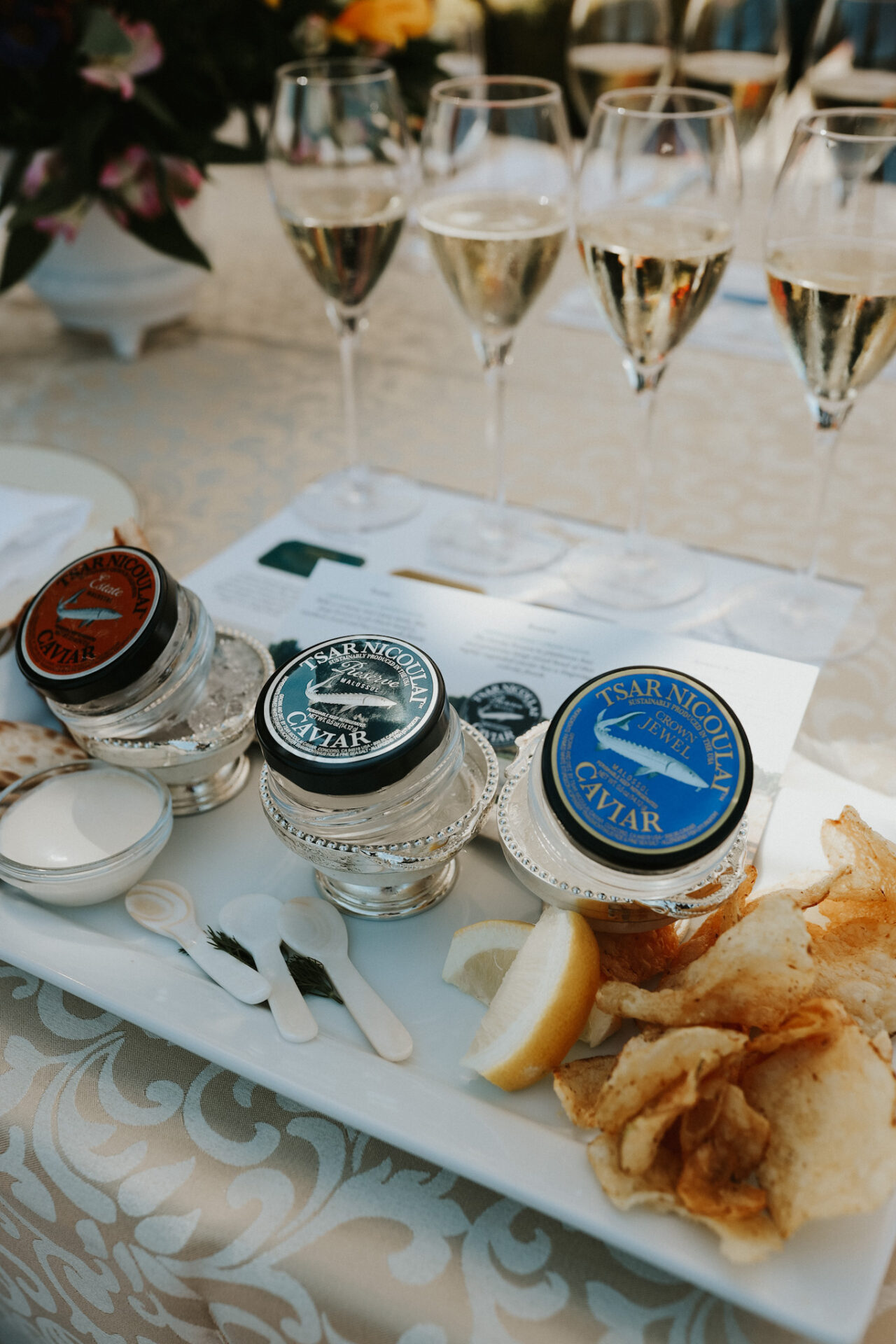
There’s this idea that caviar is for special occasions. For people who know things. For somewhere more important than your own kitchen on a random weeknight.
I used to think that too.
But here’s what wine taught me — and it turns out it applies to most beautiful things: the intimidation is the point. It keeps you at a distance from something that was always just meant to be enjoyed.
"Caviar. A cold glass of Champagne. A Tuesday. Your favorite corner of your kitchen. That’s the whole thing. That’s all it ever had to be."
Caviar has the same problem wine used to have: everyone acts like you need to earn the right to enjoy it. You don’t. A tin, a pearl spoon, something cold and sparkling in your glass, and a weeknight that needed something beautiful — that’s a special occasion.
So let’s talk about what to drink with it. Because yes, Champagne is incredible with caviar. But it’s not your only option — and knowing all of them makes the whole experience that much more fun.
BTW – you can get 35% off my favorite caviar with code WINEWITHPAIGE.
Why Wine and Caviar Work So Well Together
Before we get into the specific pairings, it’s worth understanding the logic. Caviar is salty, rich, and briny, with a creamy, almost buttery quality that coats the palate. The right drink does two things: it cleanses that richness between bites, and it amplifies the caviar’s delicate flavors rather than competing with them.
That’s why the classic pairings all share a few key qualities: high acidity, low or no tannins, minimal sweetness, and a clean mineral or saline quality that echoes the sea. Think bright, think dry, think fresh.
Heavy, tannic red wines are generally a mismatch — they overwhelm the caviar’s subtlety. Oak-forward whites can be tricky too, though some aged Burgundy pulls it off beautifully. The sweet spot is always crispness, acidity, and restraint.
The Classic: Champagne and Caviar
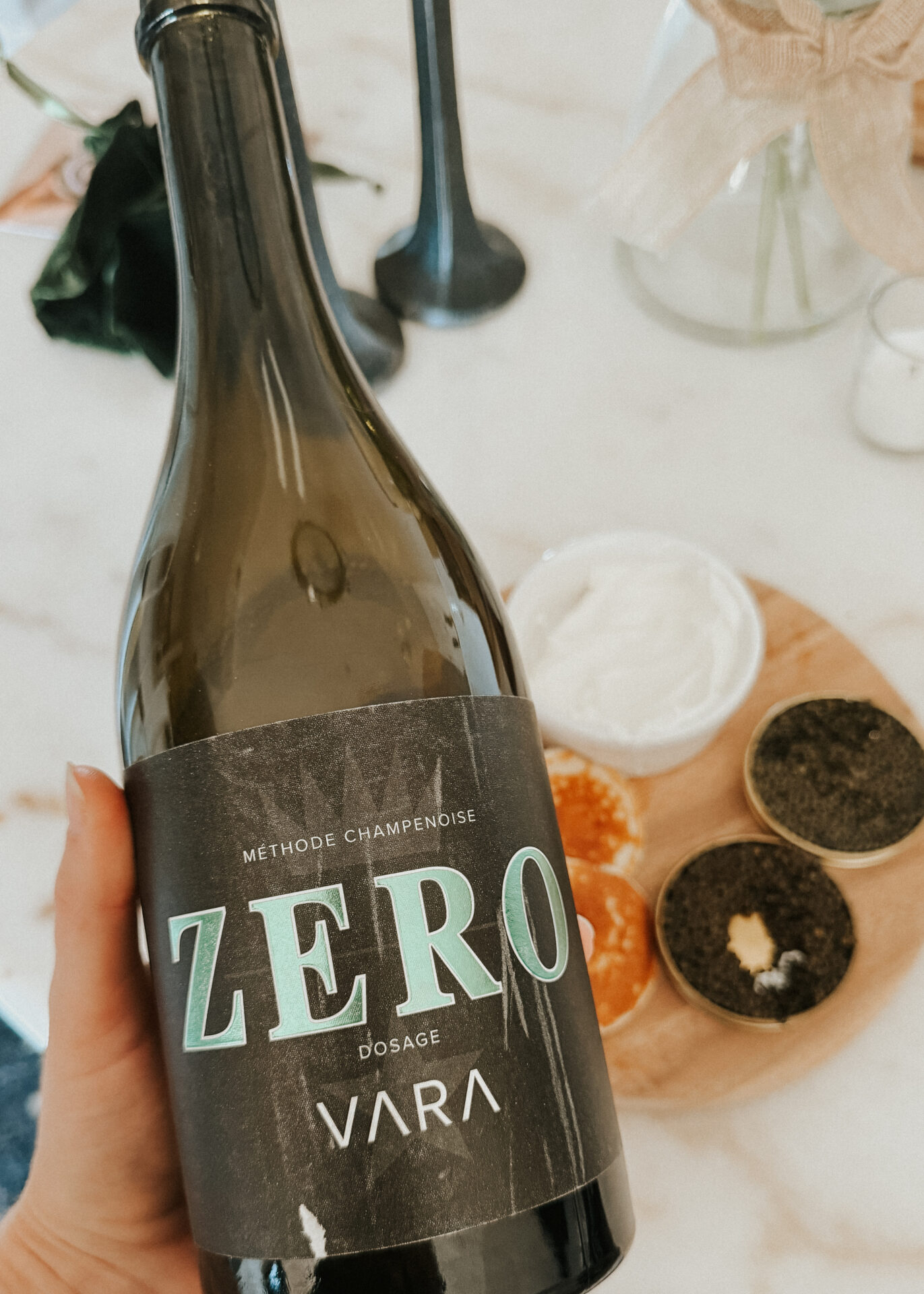
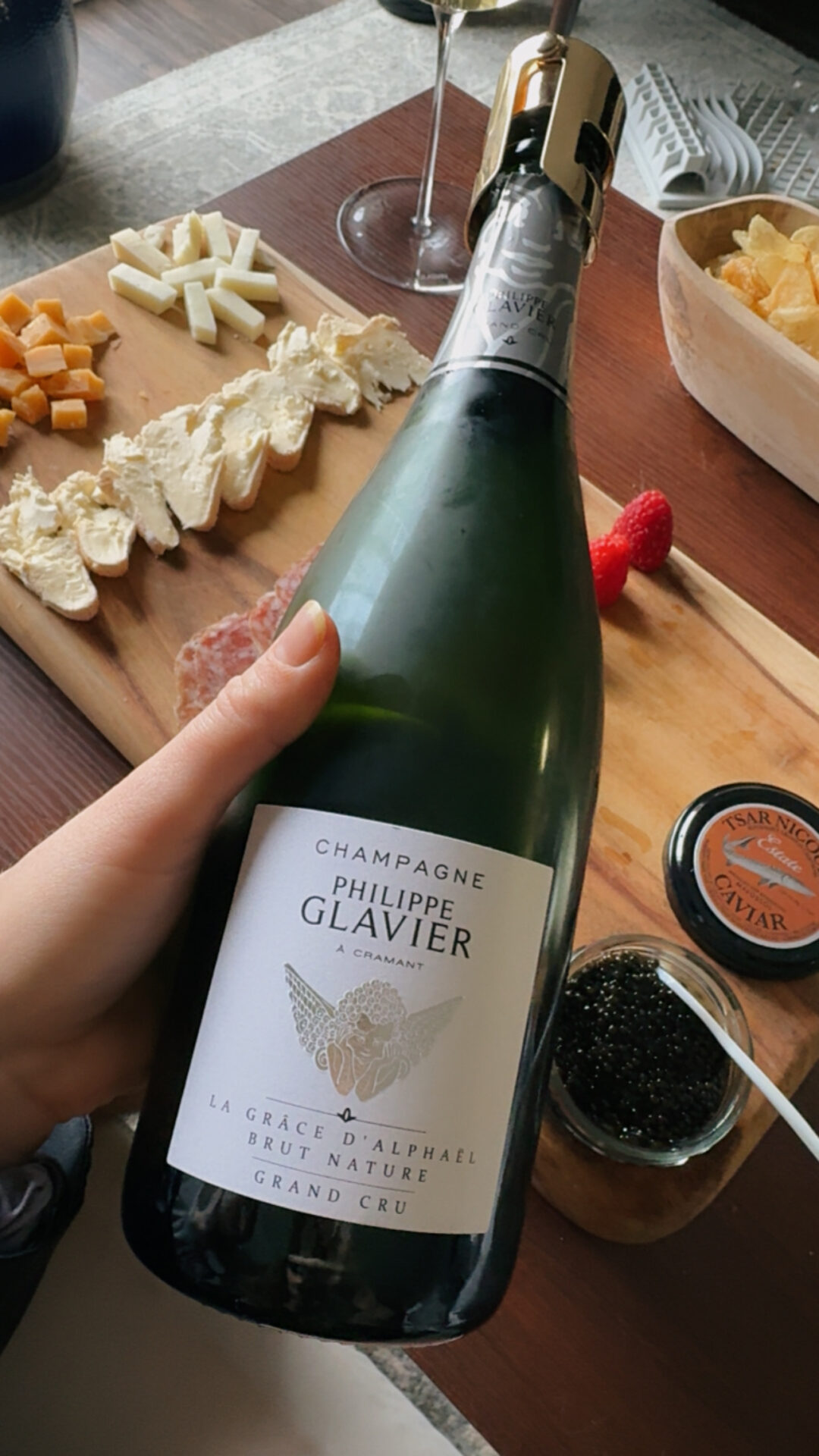
Champagne and caviar is one of the great pairings in all of food and wine. It’s been the gold standard for good reason, and if you’ve never tried them together, it should be your first stop.
The effervescence does something genuinely magical alongside caviar. Fine bubbles act as a palate cleanser between bites, resetting your mouth so every spoonful tastes as vibrant as the first. The high acidity cuts through the richness. The mineral, chalky quality of great Champagne echoes the brininess of the roe. The result is a harmony that neither achieves alone.
Which Style of Champagne to Choose
Not all Champagne is created equal for this pairing. Here’s what to look for:
- Brut or Extra Brut: Always dry. Sweetness competes with caviar’s natural salinity. Brut is the most accessible style; Extra Brut is even drier and particularly elegant alongside caviar.
- Blanc de Blancs: Made entirely from Chardonnay, Blanc de Blanc Champagne is the most refined caviar partner. Pure, mineral, and focused, with that signature Champagne brightness. This is the style most sommeliers reach for first.
- Blanc de Noirs: Made from red grapes (Pinot Noir and/or Pinot Meunier), this style brings a subtle richness and hint of red fruit. Particularly lovely alongside nuttier, more complex caviar like Ossetra.
- Vintage Champagne: For the most special occasions, a vintage Champagne matches the depth of premium caviar beautifully. Think Beluga with a prestige cuvée for the ultimate experience.
- Non-Vintage Brut: The everyday option — and a genuinely great one. A reliable non-vintage Brut from a quality house is all you need for a stunning caviar pairing at home.
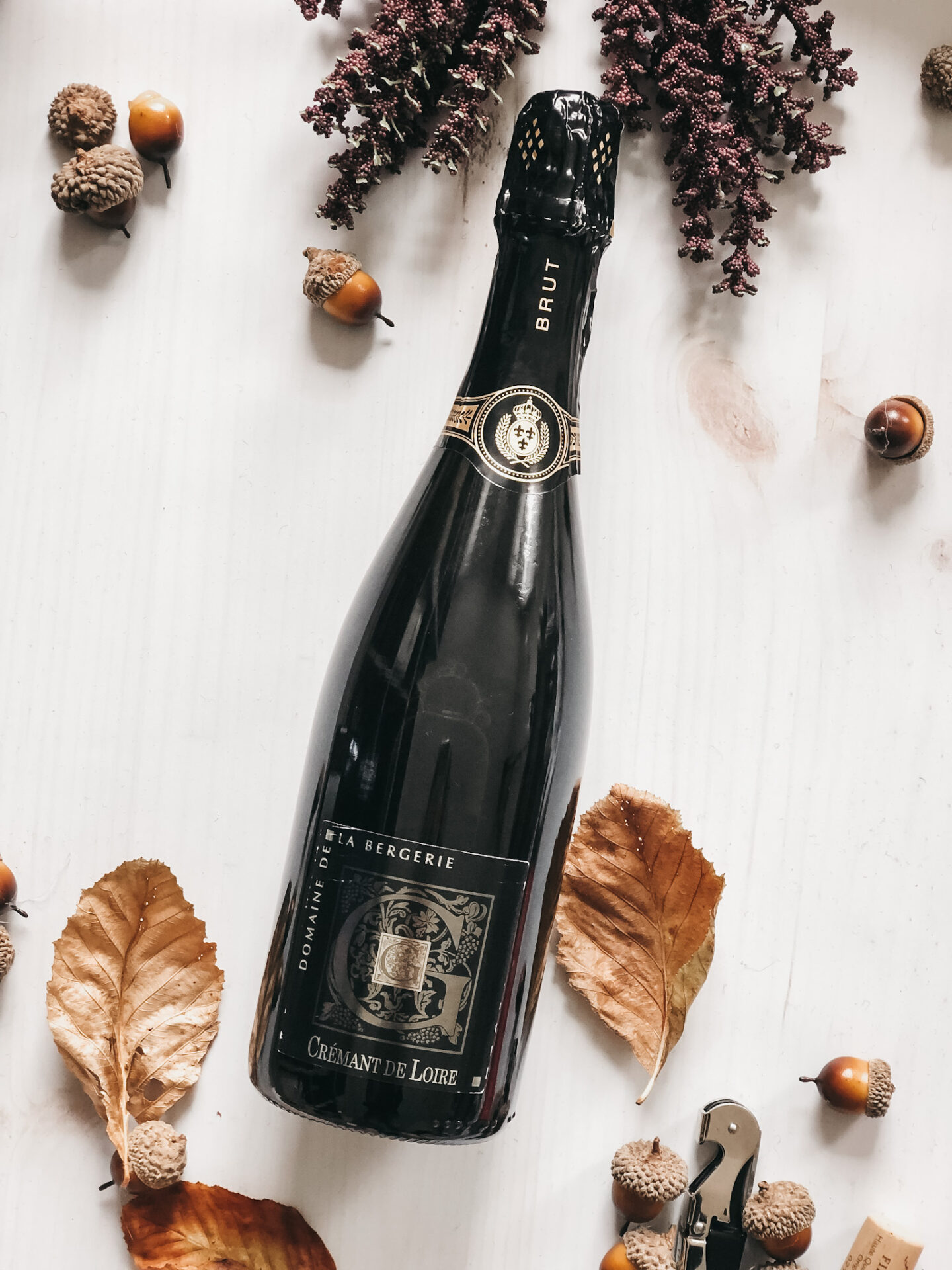

The Approachable Alternative: Crémant
If Champagne feels like a stretch for a Tuesday night, Crémant is your answer. French sparkling wine made outside the Champagne region using the same traditional method, Crémant delivers everything you love about Champagne — the bubbles, the acidity, the minerality — at a fraction of the price.
Three styles are particularly good with caviar:
- Crémant de Bourgogne: Made in Burgundy, often from Chardonnay and Pinot Noir. Elegant and mineral, with a Champagne-like quality that makes it the most natural substitute.
- Crémant d’Alsace: Often made from Pinot Blanc or Auxerrois, with a slightly fuller, rounder character. Fresh and food-friendly.
- Crémant de Loire: Chenin Blanc-based, with bright acidity and floral aromatics. A beautiful, slightly unexpected pairing that’s worth exploring.
Crémant is also where I’d point anyone who wants the full caviar and bubbles experience but isn’t ready to spend Champagne prices. The pairing is genuinely wonderful, and no one at your table will feel shortchanged.
Beyond Bubbles: Still White Wines That Work
Here’s the part most people don’t know: some of the most beautiful caviar pairings don’t involve bubbles at all. The right still white wine brings its own kind of magic — quieter, more contemplative, and in some cases even more complementary to the caviar’s flavor.
Chablis
Chablis is unoaked Chardonnay from northern Burgundy, and it might be the single best still white wine pairing for caviar. The wine is all about minerality and acidity — stone, chalk, lemon, and sea spray. That saline, almost oyster-shell quality it’s famous for mirrors the brininess of caviar in a way that feels almost custom-designed.
Premier Cru and Grand Cru Chablis alongside premium caviar is a pairing that competes with the best Champagne combinations. It’s also one of the more interesting choices to present at a dinner table — most people won’t expect it, and most people will be converted.
White Burgundy
A well-aged white Burgundy — Meursault, Puligny-Montrachet, or Chassagne-Montrachet — brings a different kind of richness to the pairing. The cream, butter, and hazelnut notes of aged Chardonnay complement caviar’s own creaminess, while the wine’s underlying acidity and minerality keep everything in balance.
This is the most luxurious still white pairing, and one worth saving for your best tins of caviar. The two together feel like they were meant to occupy the same moment.
Sancerre and Loire Sauvignon Blanc
Sancerre’s combination of bright acidity, herbaceous notes, and distinctive minerality makes it a natural caviar partner. The wine’s crispness cleanses the palate effectively, and its mineral, almost flinty character has an affinity for the caviar’s saline quality.
Additionally, Sancerre tends to be more accessible in price than top Burgundy, making it a great everyday-luxury pairing option.
Dry Riesling
A bone-dry, high-acid Riesling — particularly from Alsace or Germany’s Mosel — is an underrated caviar pairing that deserves more attention. The wine’s bright acidity, floral aromatics, and mineral depth work beautifully, and the slight petrol note in older Riesling creates a fascinating counterpoint to the caviar’s brininess.
Other Sparkling Wines Worth Trying
Champagne and Crémant aren’t the only sparkling options. These deserve a mention:
- Franciacorta (Italy): Italy’s finest sparkling wine, made by the traditional method in Lombardy. Refined, elegant, and very Champagne-like in character. An excellent caviar pairing and a great conversation starter.
- Cava (Spain): Made in the same traditional method, Cava delivers bright acidity and crisp, mineral character at an approachable price. Look for Reserva or Gran Reserva styles for the most complexity.
- California Sparkling Wine: Traditional-method sparkling wines from Sonoma and Anderson Valley can be genuinely excellent caviar pairings. The bright acidity and distinctive fruit character of California sparklers bring something slightly different — and delicious — to the experience.
- Dry Prosecco: Lighter and more casual than Champagne, a dry (Brut) Prosecco is a lovely, accessible option for a relaxed caviar moment at home. Especially good alongside milder, more delicate caviar varieties. Related: Champagne vs Prosecco. What’s the Difference?
It’s also important to serve your wines at the correct temperature. I love having a small wine fridge to always have something chilled on-hand.
What to Avoid
A few things don’t play nicely with caviar:
- Oaky Chardonnay: Heavy oak flavors compete with and overpower caviar’s delicacy. An unoaked or lightly oaked style is always preferable.
- Tannic red wines: Tannins clash harshly with caviar’s saline, oceanic character. Big Cabernet Sauvignon, Syrah, or Barolo are not the right companions here.
- Sweet wines: Residual sugar doesn’t balance caviar — it amplifies the saltiness in an unpleasant way. Always go dry.
- Heavily aromatic whites: Very intensely perfumed wines like Gewurztraminer can overwhelm caviar’s subtle flavors. Save those for something more assertive on the plate.
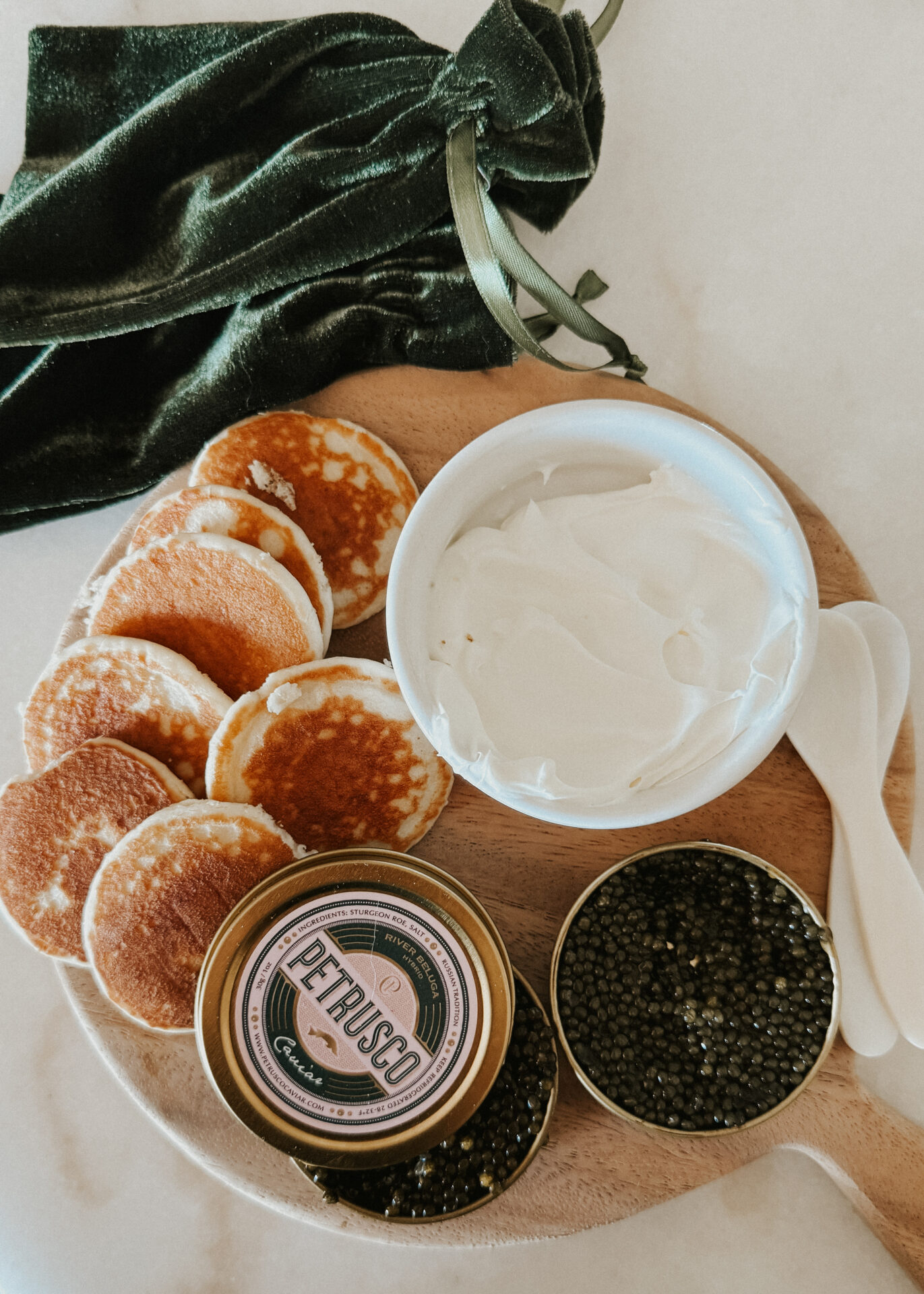

How to Serve Caviar at Home
The setup is simpler than it looks. Here’s what you actually need:
- A mother of pearl spoon: Non-negotiable. Metal spoons impart a metallic flavor that ruins the experience. Pearl, bone, or glass are the only materials worth using. Here’s my favorite.
- Keep it cold: Serve caviar nestled in crushed ice. The cold preserves the texture and keeps the flavors clean.
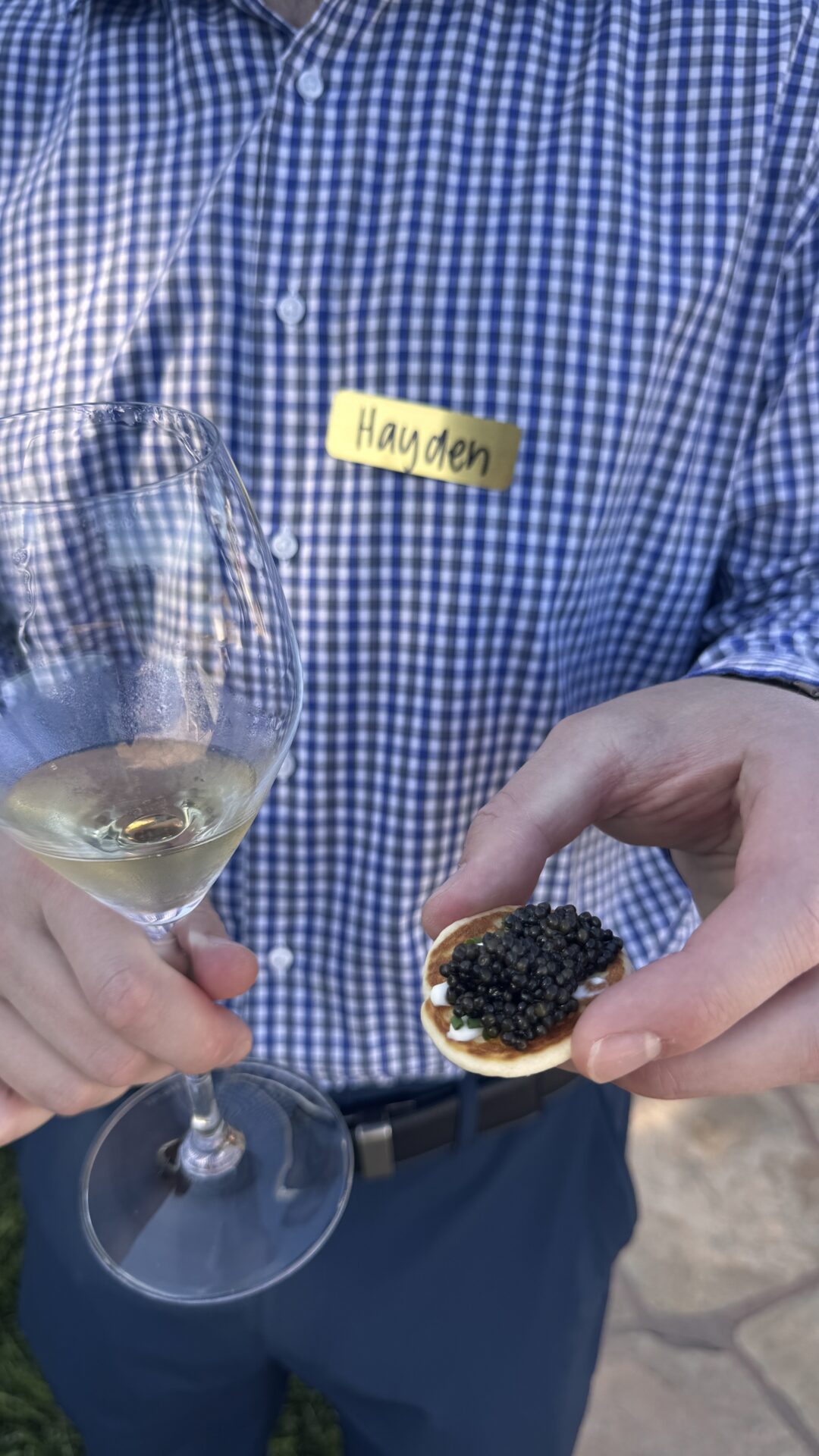
- A neutral base: Blinis, plain crackers, or lightly toasted bread. Keep it simple — the caviar is the point.
- Optional garnishes: A small amount of crème fraîche, finely chopped chives, or a tiny squeeze of lemon. Don’t overdo it.
- Chilled wine: Whatever you’re pouring, make sure it’s cold. Champagne at 45°F, still whites slightly warmer around 50°F.
That’s genuinely it. The whole thing takes five minutes to set up. The experience lasts much longer.
Frequently Asked Questions
What is the best Champagne to have with caviar?
A Blanc de Blancs Brut or Extra Brut is the classic choice — pure, mineral, and perfectly dry. For a non-vintage option, look for consistent quality houses that prioritize minerality and freshness. If you want to go vintage, pair premium caviar like Beluga or Ossetra with a prestige cuvée for a truly special experience.
Can you pair red wine with caviar?
Generally not recommended. Red wine’s tannins clash with caviar’s delicate saline character. If you love red wine and want to experiment, a very light-bodied Pinot Noir served slightly chilled is the closest you’ll get to a workable pairing — but it’s still not the ideal choice.
Do you have to drink Champagne with caviar?
Absolutely not. Champagne is wonderful, but Chablis, Sancerre, Crémant, and quality sparkling wines from Italy and Spain all make excellent pairings. The key qualities to look for are high acidity, dryness, and mineral character — not the specific wine.
What is a more affordable alternative to Champagne for caviar?
Crémant de Bourgogne is the closest in character to Champagne and is significantly more affordable. Cava from Spain and Franciacorta from Italy are also excellent budget-conscious alternatives. For still wine, a good Chablis Village-level bottling delivers remarkable value alongside caviar.
How much caviar do you need per person?
For a caviar tasting or appetizer at home, plan for about one to two ounces per person. That’s enough to enjoy the experience properly without feeling like a small fortune disappearing in one sitting. Start with a good quality farmed Ossetra if you’re new to caviar — it’s widely available, reasonably accessible in price, and a genuinely beautiful place to begin.
Here’s the thing about caviar: once you try it at home, once you realize it fits on your kitchen counter on a perfectly ordinary evening with a cold glass of something lovely, the mystique doesn’t disappear. It transforms into something better — familiarity.
You’ll understand why the pairing with Champagne has endured for centuries. You’ll discover which style of wine you love most alongside it. And you’ll stop waiting for a special occasion, because you’ll know that you’re allowed to make one whenever you feel like it.
That’s the whole thing. That’s all it ever had to be.
Cheers. 🥂
More Wine Pairing Posts You’ll Love
