
Introduction
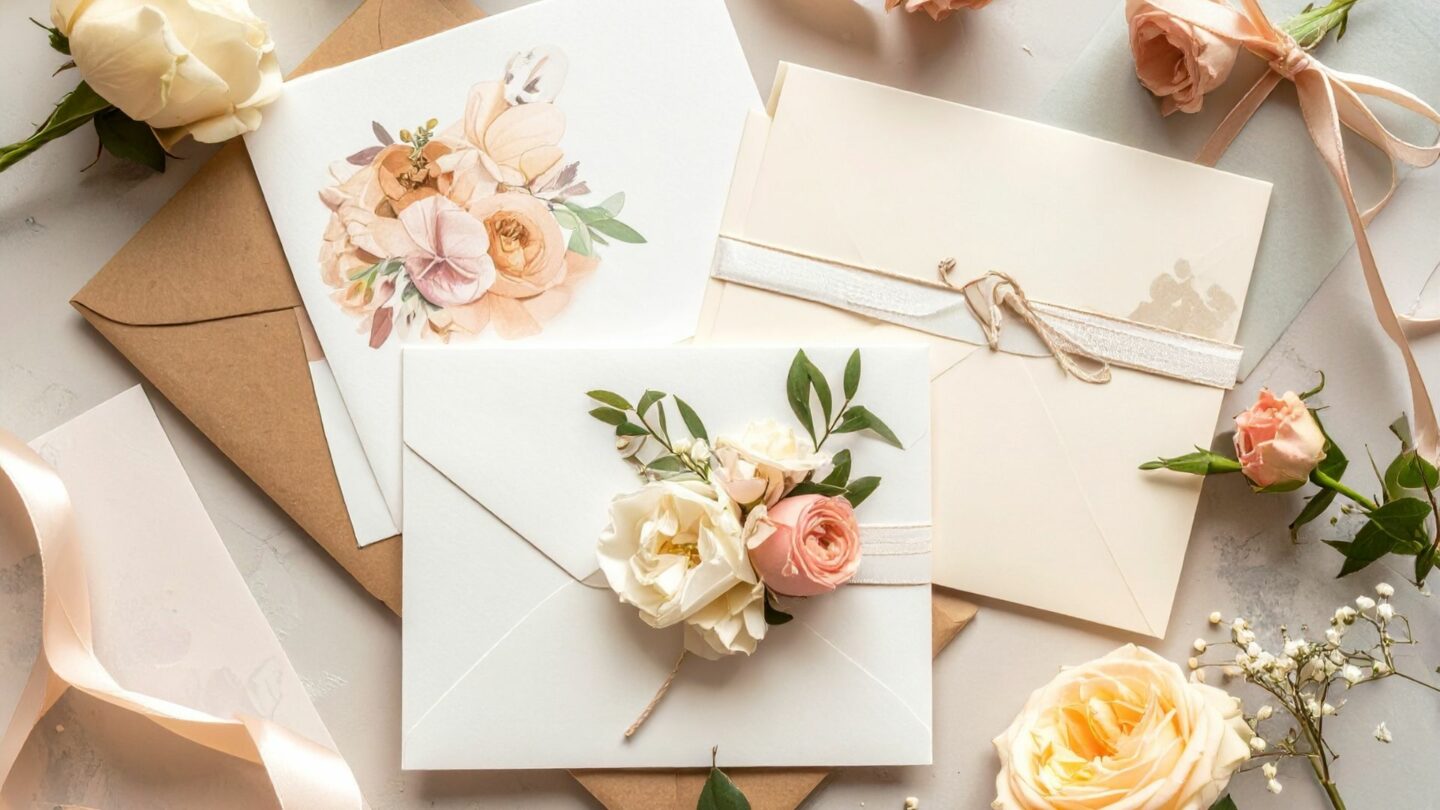
Your invitations are the very first hint your guests receive about your wedding. They set the tone, spark excitement, and quietly signal what kind of celebration you’re planning. Soft and romantic? Sleek and city‑chic? A countryside gathering with string lights and long farm tables? Your invitation style can communicate all of that—before anyone even RSVPs.
And with couples becoming more thoughtful about paper goods, there’s plenty to play with. According to Bridal Times, couples in Germany spend an average of €303 on stationery—from invitations to name cards—while nearly 6 out of 10 keep their total under €250. Only a small number go beyond €500. This range reflects how flexible stationery choices can be, and it also means you can match your theme beautifully without stretching the budget.
Whether you’re planning a rustic barn celebration, a sleek city loft event, a vintage garden party, or a minimalist ceremony, the right design can elevate the whole experience. Style. Color. Texture. Printing method. When they come together, magic happens.
Below, we’ll break down distinct wedding themes, explore invitation styles that match each one, and look at how today’s trends—like textured paper, watercolor illustrations, and soft neutrals—fit into the mix. We’ll also highlight helpful market insights from global research firms, including insights into the growing interest in stationery and printing services.
Let’s dive in.
The Role of Invitations in Today’s Weddings
Before we go theme‑by‑theme, it helps to look at what’s happening in the wedding stationery space.
The global market for wedding invitation printing services was valued at about US$ 4.013 billion in 2024, according to Valuates Reports. It’s projected to reach US$ 6.119 billion by 2031, growing at a 6.3% CAGR between 2025 and 2031.
Couples are putting real thought into paper goods. Why? Because invitations help shape the experience, and personalization matters more than ever. In fact, the global wedding stationery service market itself was valued at USD 0.88 billion in 2024 and is projected to grow to USD 1.99 billion by 2033, based on data from Business Research Insights. That’s a 10.6% CAGR from 2025 to 2033—strong growth fueled by couples who want stationery that feels tailored.
This rise in personalization explains why tools and resources for creating custom wedding stationery are more popular than ever.
Even a quick look at the broader wedding services market shows how significant this segment has become. According to Grand View Research, global wedding services reached USD 899.64 billion in 2024, with rapid growth expected over the next several years. Interestingly, the Asia‑Pacific region makes up 41.1% of global revenue, reflecting cultural emphasis on elaborate celebrations and detailed artistry.
And across the U.S., data from the latest Real Weddings Study by The Knot shows how couples continue to personalize everything—from decor to invitations—while also relying on vendor marketplaces to source designers who match their aesthetic.
All of this supports one simple truth: Invitations matter.
Section 1: Rustic Wedding Themes
Rustic weddings feel warm, inviting, and natural. Think barn venues, vineyards, forested settings, or cozy outdoor spaces with textured linens and candlelit tables.
What Defines a Rustic Invitation?
- Warm earth tones: terracotta, sage, wheat, charcoal
- Textured materials: kraft paper, cotton paper, deckled edges
- Hand‑drawn botanical illustrations
- Twine, pressed flowers, or wax seals
Printing Styles That Work Well
- Letterpress for a tactile, handcrafted look
- Foil accents in copper or muted gold
- Digital watercolor printing
Why Rustic Invitations Shine
Rustic themes benefit from imperfection. A deckled edge doesn’t just look pretty—it feels intentional, soft, relaxed. Watercolor florals can reflect the venue’s landscape, while kraft envelopes add a natural, earthy mood. Neutrals play well here, especially when layered with matte textures.
Example Combinations
- Couples marrying at a vineyard might match wine‑inspired watercolor swirls with a cotton paper invitation featuring tonal lettering.
- A barn wedding could pair botanical line drawings with letterpress printing and a twine tie.
- A forest celebration might lean into hand‑painted greenery and moss‑green envelopes.
Section 2: Minimalist Wedding Themes
Minimalist weddings focus on simplicity, clarity, and intentionality. Clean lines. Soft color palettes. No fuss.
Elements of Minimalist Invitations
- Thin sans‑serif typography
- Lots of white space
- Soft, muted neutrals (cream, slate gray, blush beige)
- High‑quality paper with a smooth or subtly tactile finish
Printing Techniques
- Digital printing for crisp typography
- Letterpress for subtle depth without overwhelming
Why Minimalist Invitations Work
Minimalist stationery puts design first. Even small choices—like a bold date in oversized print or a partial‑page block of color—stand out. Couples who want something quiet but striking often love this style.
Example Combinations
- A city rooftop wedding might pair soft oatmeal paper with black minimalist type.
- An intimate courthouse ceremony could use a single‑page announcement with elegantly spaced lettering.
- A neutral‑themed garden wedding may use a pale beige invitation with embossed initials.
Section 3: Vintage Wedding Themes
Vintage themes draw from the charm of earlier eras—Victorian details, 1920s flair, or mid‑century fonts.
Signature Elements
- Ornate frames, filigree borders
- Old‑world typography
- Soft pastels or sepia tones
- Deckled‑edge paper or cotton paper
- Ribbon or wax seals
Printing Styles That Work
- Letterpress for old‑world elegance
- Foil stamping in gold or rose‑gold
- Engraving for high formality
Why Vintage Invitations Stand Out
Vintage invitations feel timeless. They tap into nostalgia and romance while complementing lace gowns, antique decor, and candlelit venues.
Example Combinations
- A historic estate wedding might feature engraved typography on thick cotton paper.
- A 1920s‑inspired celebration could use art‑deco fonts with geometric foil accents.
- A Victorian garden party might highlight soft watercolor florals and delicate script.
Section 4: Contemporary Wedding Themes
Contemporary (non‑corporate word alternative) weddings lean into crisp aesthetics, thoughtful shapes, and sleek color choices.
Key Elements
- Bold typography
- Creative layouts
- Geometric accents
- Unexpected materials like vellum or acrylic
Printing Styles
- Digital printing
- Foil stamping in silver or matte gold
- Spot gloss for dramatic contrast
Why They Work
This style thrives on creativity. You can play with asymmetry, unique shapes (arches, half‑moons), or layered pieces. Acrylic invitations, for example, give the tactile impression of something custom and one‑of‑a‑kind.
Example Combinations
- A gallery wedding might use bold type layered over vellum.
- A loft ceremony could use silver foil text on soft gray cardstock.
- A downtown celebration may use arched acrylic invites paired with monochrome envelopes.
Paper Trends Couples Love Right Now
You’ve explored theme‑specific ideas, but some trends cut across nearly every style.
1. Textured Paper
Cotton paper, linen textures, handmade sheets—these add dimension and a high‑end feel instantly.
2. Soft Neutrals
Beige, taupe, dusty rose, mushroom gray—these shades blend beautifully with rustics, minimalist looks, and vintage settings.
3. Watercolor Illustrations
Watercolors give invitations personality. Florals, venue sketches, or abstract washes help introduce the wedding’s mood.
4. Layered Invitations
Think vellum wraps, belly bands, ribbon ties, and multi‑piece suites.
5. Eco‑Friendly Options
Recycled paper or plantable seed paper appeals to couples seeking sustainable touches.
Choosing Printing Techniques Based on Theme
Letterpress
Perfect for rustic, minimalist, and vintage themes. Its tactile impression feels handcrafted and thoughtful.
Digital Printing
Great for watercolor illustrations, bold colors, and large text blocks.
Foil Stamping
Ideal for elegant celebrations—vintage or contemporary. Works well with deep jewel tones.
Engraving
High‑formality, suitable for estate weddings or black‑tie themes.
How to Match Invitations to Your Theme
Here’s a simple framework:
1. Start with Your Venue
Barn, ballroom, backyard, vineyard—the venue provides visual clues.
2. Identify 2–3 Mood Words
Examples: romantic, airy, botanical. Use these as your guiding pillars.
3. Pick a Color Palette
Pull from your florals, decor, or seasonal tones.
4. Choose Paper First
Paper affects the entire feel. Smooth. Textured. Handmade.
5. Add Design Elements
Florals, monograms, silhouettes, shapes, watercolor washes.
6. Select the Printing Technique
This is where craftsmanship really shows.
7. Build Out Your Suite
RSVP cards, menus, day‑of signage—all should align.
Bringing It All Together: Invitation Styles by Theme
Rustic
- Watercolor greenery
- Kraft paper
- Copper foil
- Twine accents
Minimalist
- Thick white cardstock
- Sans‑serif typography
- Embossed initials
- Neutral envelopes
Vintage
- Filigree borders
- Pastel palettes
- Cotton paper
- Ribbon ties
Contemporary
- Acrylic materials
- Bold layouts
- Vellum overlays
- Geometric designs
Market Insights That Support These Choices
Couples across the world continue to personalize their day. The Knot’s recent study, which surveyed nearly 17,000 couples, highlights evolving trends—from digital planning habits to stationery decisions made through vendor marketplaces.
This mirrors the broader growth of the wedding services industry. With a projected 12.7% CAGR from 2025 to 2030 (data from Grand View Research), couples don’t just want a wedding—they want their wedding.
Paper goods included.
Conclusion
Your invitations are more than paper. They’re the very first chapter of your celebration—and they help your guests sense the atmosphere you’re creating.
Rustic weddings shine with watercolor greenery and textured edges. Minimalist celebrations thrive on crisp lines and soft neutrals. Vintage events feel magical with filigree borders and cotton paper. Contemporary themes give you room to experiment with shapes, layers, and bold type.
Whether you’re crafting something artisanal or exploring custom wedding stationery tools, the goal is simple: choose a design that feels like you.
Once you build your theme and select your visual elements, everything else falls into place—the paper, the printing style, the accents.
Your invitations speak before you ever walk down the aisle. Make them count.
